
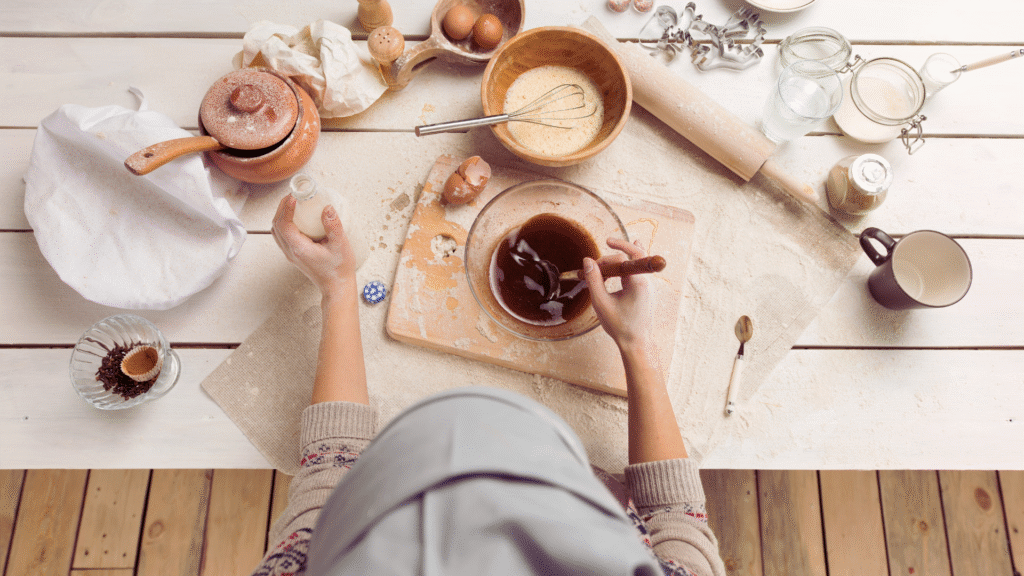
Many people find baking intimidating, but it becomes manageable once the basics are understood. Knowing how ingredients interact, measuring accurately, and following techniques properly are essential to successful baking. These fundamentals help create consistent and satisfying results every time.
Understanding the role of common ingredients like flour, sugar, eggs, and butter sets a strong foundation. Temperature control and timing also significantly affect the texture and flavour of baked goods.
This article breaks down essential baking knowledge into clear and practical advice. It aims to build confidence by focusing on what every baker should know before starting any recipe.
Essential Baking Equipment and Tools
Precision and consistency are key to successful baking. Having the right tools helps control measurements, heat, and mixing, which directly affect the final product’s quality.
Measuring Cups, Spoons, and Kitchen Scales
Accurate measurement is critical. Measuring cups are ideal for dry ingredients like flour and sugar, often marked in both metric and imperial units. Liquid measuring cups usually have a spout and extra space to prevent spills.
Measuring spoons cover small quantities, from 1/4 teaspoon to 1 tablespoon, essential for baking powder, salt, and extracts.
A kitchen scale provides the most precise method, especially for ingredients like flour and butter. It reduces variability by weight rather than volume, ensuring consistent results every time.
Baking Sheets and Non-Stick Surfaces
Baking sheets must be sturdy with straight edges to hold dough or batter. Aluminium baking sheets distribute heat evenly and resist warping.
Non-stick surfaces reduce the need for extra grease and make removal easier. Silicone mats or parchment paper prevent sticking without affecting baking quality.
Using parchment paper also simplifies clean-up and helps protect the baking sheet from burnt residue.
Whisks and Spatulas
A whisk is designed to incorporate air into mixtures, ideal for eggs and batter. Balloon whisks work well for light, fluffy results, while flat whisks help with sauces.
Spatulas come in various shapes; a rubber spatula is key for scraping bowls clean, avoiding waste. A metal or silicone spatula is useful for folding ingredients gently without deflating air.
Both tools aid in mixing, folding, and smoothing batters or dough.
Oven Thermometers and Parchment Paper
Oven thermostats can be inaccurate. An oven thermometer placed inside ensures the correct baking temperature, avoiding over- or undercooked goods.
Parchment paper is heat-resistant and offers a non-stick surface. It maintains moisture, prevents spreading, and reduces burning on the bottom of baked items.
It’s reusable in some cases, making it a practical choice to keep baked goods consistent and easy to remove.
Mastering Baking Ingredients
Baking requires precise knowledge of ingredients and their functions. Using the right flour, sugar, and dry ingredients ensures texture and flavour. Leavening agents control rise and crumb structure. Correctly preparing room-temperature ingredients affects mixing and final results.
Understanding Flour, Sugar, and Dry Ingredients
Flour is the structure builder in baking. Different types, such as plain, self-raising, and strong bread flour, have specific protein levels that affect gluten development. Plain flour works well for cakes, while strong flour suits breads. Measuring flour by weight avoids inconsistencies.
Sugar not only sweetens but also tenderises and helps with browning. Granulated sugar is standard, while caster sugar dissolves faster, ideal for delicate cakes. Brown sugar adds moisture and a caramel flavour.
Other dry ingredients like cocoa powder or spices must be sifted with flour to ensure even distribution and prevent clumps. Salt is necessary to balance flavour and strengthen gluten.
Leavening Agents and Their Roles
Leavening agents create gas bubbles that make baked goods rise. Common agents include baking powder, baking soda, and yeast.
Baking powder combines an acid and a base, releasing carbon dioxide when wet and heated. Baking soda requires an acidic ingredient (like buttermilk) to activate. Incorrect use can cause flat or dense results.
Yeast is a living organism used mainly in bread, producing carbon dioxide through fermentation. It requires time to proof and develop flavour and texture. The choice depends on recipe type and desired outcome.
Room Temperature Ingredients
Using ingredients like eggs, butter, and milk at room temperature improves mixing and texture. Cold butter can lead to uneven mixtures, while warm butter blends smoothly with sugar, creating a fluffy batter.
Eggs at room temperature emulsify better, trapping air during mixing. This results in lighter cakes and improved rise. Milk warms ingredients and promotes proper chemical reactions with leavening agents.
To quickly bring ingredients to room temperature, gently warm them or leave them out for 30-60 minutes before baking.
Fundamental Baking Techniques
Baking requires attention to detail and precise execution. Understanding how to measure, mix, incorporate ingredients, and test baked goods affects the final product’s texture and taste. Each step influences the outcome in specific ways.
Accurately Measuring Ingredients
Measuring ingredients correctly is critical for recipe success. Use dry measuring cups for flour, sugar, and powders, and liquid measuring jugs for water, milk, and oil. Spoon flour into the measuring cup and level it off with a knife instead of scooping directly. This prevents compacting, which can cause excess flour.
Weighing ingredients with a kitchen scale provides the greatest accuracy and consistency, especially for flour and butter. For sticky ingredients like honey, lightly oil the spoon or cup to ease removal.
Precise amounts affect chemical reactions in baking. Too much flour can make baked goods dry; too much sugar can alter texture and stability.
Mixing and Folding Methods
Different mixing techniques impact texture. Creaming involves beating butter and sugar until light and fluffy. This traps air and helps leaven cakes. Over-creaming makes batter greasy and dense, so timing matters.
Folding gently combines light ingredients like whipped egg whites or flour without deflating air bubbles. Use a spatula and cut down through the mixture, turning it over carefully.
Overmixing batter with flour develops gluten, causing tougher results, especially in cakes. Stir just until ingredients are blended for a tender crumb and proper rise.
Sifting and Incorporating Dry Ingredients
Sifting aerates flour and removes lumps, making it easier to blend with wet components. Use a sieve to sift flour, baking powder, or cocoa powder before use. This promotes even distribution and a lighter texture.
When adding dry ingredients, fold or stir gently into wet mixtures. Sudden or rough mixing can break air pockets and lead to dense, uneven baking.
Sifting can sometimes be skipped in recipes that use pre-sifted flour, but checking the recipe’s instructions is crucial.
Checking Doneness and Cooling
Oven temperatures vary, so rely on visual and tactile cues besides timing. Insert a skewer or toothpick into the centre; it should come out clean or with a few moist crumbs. Cakes pull slightly from the pan edges when done.
Cooling affects texture and structure. Remove baked items from pans after a few minutes to prevent sogginess from steam. Cooling on wire racks allows air circulation, stopping cooking and moisture build-up.
Proper cooling ensures easier handling and prevents collapse or sogginess in pastries and cakes.
Starter Recipes to Practise Baking Basics
Baking beginners should focus on recipes that teach fundamental skills such as mixing, measuring, and controlling oven temperature. These basics form the foundation for more complicated baking projects.
Classic Banana Bread
Banana bread is a practical recipe for learning how to combine wet and dry ingredients properly. Overripe bananas provide natural sweetness and moisture, eliminating the need for extra sugar or fat.
Typical ingredients include mashed bananas, flour, sugar, eggs, baking soda, and butter or oil. The key is to mix the ingredients just enough to combine, preventing a tough, dense texture.
Baking takes place at around 175°C (350°F) for 50-60 minutes. Testing readiness is simple: a skewer inserted in the centre should come out clean. It also helps practice oven timing and temperature control.
Simple Pancakes
Pancakes teach the importance of batter consistency and heat management on a stovetop. Their quick cooking time allows for immediate feedback on texture and doneness.
A basic batter is a mix of flour, milk, eggs, baking powder, and a pinch of salt. The batter should be smooth but slightly lumpy, not overmixed to avoid toughness.
Cooking pancakes involves a preheated non-stick pan or griddle at medium heat. They’re ready to flip when bubbles form on the surface, helping to develop timing instincts. Pancakes also allow beginners to practise flipping without burning.